
“Anyone who is not shocked by quantum theory has not understood it.”

La física cuántica es lo que yo llamo una “ciencia existencial.” Es una ciencia que nos pone en contacto directo con la rareza y la grandeza del universo.
También es una “ciencia útil.” Promete tecnología que creará industrias de miles de millones, o incluso billones, de dólares.
Pero, por supuesto, es una ciencia incomprendida. Menos de una centésima parte del uno por ciento de los humanos puede explicar qué es realmente lo cuántico o hacia dónde va. El objetivo de este curso es convertirte en uno de los que sí pueden.
Qué significa “cuántico”
Cuántico significa “en partes.” Cuando los científicos empezaron a trabajar con cosas diminutas como electrones y fotones, observaron comportamientos poco intuitivos, a los que llamaron comportamientos “cuánticos.” Estos comportamientos no encajaban en el modelo del mundo que habíamos llegado a conocer.
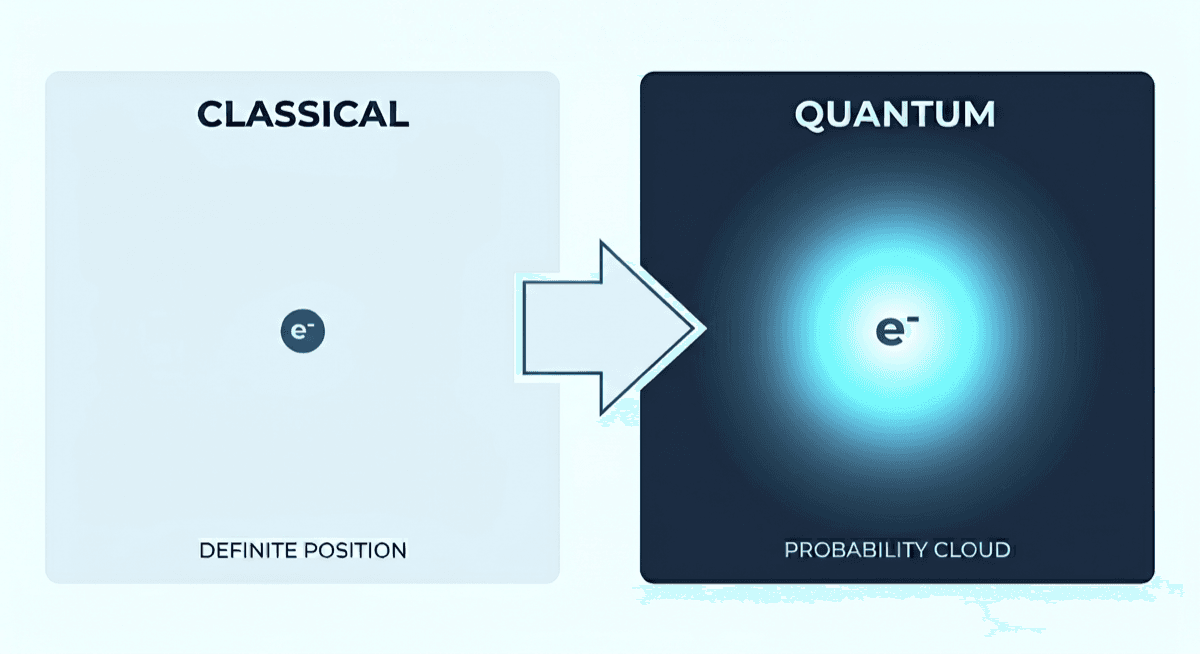
Por ejemplo, nuestro viejo modelo dice que los objetos tienen propiedades bien definidas, como la posición, y que podemos medir esa posición en todo momento. Sin embargo, descubrimos que los electrones no se comportan así. Se comportan como si no estuvieran en una ubicación fija en absoluto. Pueden tener efectos de largo alcance que demuestran que actúan más como una nube que como una partícula. Los científicos llamaron a esto una superposición, porque es un concepto que va más allá de una “posición.”
Durante los siguientes 50 años, los científicos incorporaron estas observaciones a un modelo del universo completamente nuevo. Este modelo es en realidad más permisivo, así que permite cosas que no creíamos posibles. Por ejemplo, no exige que los electrones y los fotones tengan una ubicación, orientación o velocidad definidas.
Resultó que este nuevo modelo era mucho más preciso que el anterior.
Desde entonces, lo cuántico se ha apoderado de la física. En la conferencia de física más grande del mundo, el APS Global Physics Summit de 2025, más del 75% de los expositores estaban relacionados con lo cuántico.
Qué desbloquea lo cuántico
Ahora, los frutos de 100 años de progreso en mecánica cuántica están madurando. Están saliendo al mercado nuevas tecnologías cuánticas capaces de romper muchas suposiciones que teníamos sobre el mundo. Aquí hay algunos ejemplos.
Mejores diagnósticos
Suponíamos que había un límite al objeto más pequeño que podíamos ver con luz normal. Ernst Abbe lo bautizó como el límite de difracción. Para ver más pequeño, tuvimos que inventar los microscopios electrónicos, e incluso estos tienen sus propios límites.
Se han inventado nuevos microscopios cuánticos capaces de romper el límite de difracción. Estos microscopios usan propiedades cuánticas de la luz para ver objetos extremadamente pequeños, tan pequeños como los virus.
Computadoras más rápidas
Asumíamos que había ciertos problemas que las computadoras nunca podrían resolver. Dos de ellos son:
- Romper contraseñas “RSA” de 2048 bits, que se usan en todo internet.
- Predecir propiedades moleculares, lo que permitiría diseñar clases completamente nuevas de medicamentos.
Pero ahora sabemos que ambos son posibles. Obviamente, romper contraseñas no es un buen resultado para el mundo. Por eso debemos ser muy cuidadosos e informados sobre estas tecnologías.
Comunicaciones seguras
Asumíamos que, al enviar información por internet, no había forma de garantizar que nadie la copiara en secreto.
Sin embargo, ahora sabemos que la cuántica permite las primeras comunicaciones del mundo imposibles de espiar.
Tres conceptos fundamentales
Lo cuántico tiene solo tres conceptos fundamentales:
- Medición
- Superposición
- Entrelazamiento
En las siguientes guías, aprenderás sobre cada uno de estos conceptos fundamentales en profundidad.