Qubits are the foundation of every quantum technology. If you understand qubits, you understand a huge part of the future.
- 1
Quantum computers use qubits as their fundamental unit of information.
- 2
Quantum sensors use qubits to sense the world.
- 3
MRIs use atomic qubits inside your body to diagnose diseases!
There are many definitions of what a qubit is, but the simplest one is this: a qubit is a tiny thing that points in a direction.
A qubit is a tiny thing that points in a direction.
First, what does it mean to point in a direction?
We literally mean, a direction in 3-D space! Let's take a look at an example: an electron's spin.
Not many people remember from chemistry class, but electrons are little magnets! We have a name for the direction of their north pole: spin.
The magnetic field of an electron can point up, down, or any direction in between.
An electron is, therefore, a qubit: a tiny thing that points in a direction.
Photons can be qubits too. They have a property called polarization that can be thought of as pointing in a direction, via a mapping called the Poincaré sphere. We won't dig into it here.
How tiny does it have to be?
This is the tricky part. A qubit has to be tiny enough that it can be isolated from every other object or force that could depend on or influence its state. Only then can we see quantum behavior, in particular entanglement, arise.
A bar magnet could be a qubit, except it's just too messy, air impacts it, humans touch it, it's just too big. Every time something interacts with it, it becomes entangled with the magnet. Entanglement is explained here. If our qubit becomes entangled with too many things we don't have control over, we no longer can predict how it will act. The over-entanglement of an object is called decoherence. We hate it when things decohere, because then they're not as useful and controlled anymore. Bar magnets decohere almost instantly.
In order to truly isolate a qubit from everything else, it either has to be in some shielded pocket of a stable material, like NV centers in diamond, or cooled down significantly, like the resonator qubits that Google and IBM use. Technically, qubits don't have to be small, the largest one created was a 16-microgram sapphire crystal. However, they do have to resist entanglement with unintended sources for a long time.
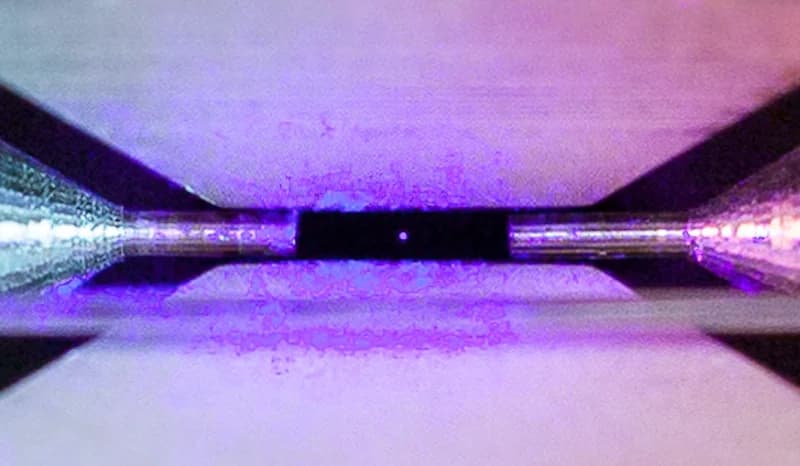
We have found plenty of qubits that don't decohere as fast:
How do we measure a qubit?
It's very, very hard to measure the direction of an electron's magnetic field, in fact, theoretically impossible. The most you can do is ask a yes/no question: is it pointing up, or down? (Or any two opposite directions you choose.) That's called a measurement.
This is actually a fundamental property of qubits: when you measure, you only get one of two results, usually called “up” and “down,” or 0 and 1. That property, that a measurement always returns one of two outcomes, is why qubits are often called two-level quantum systems.
In the lab we can measure if the spin of an electron is pointing up or down. The way we do this is, we have a special laser in the lab that we can shoot at the electron.
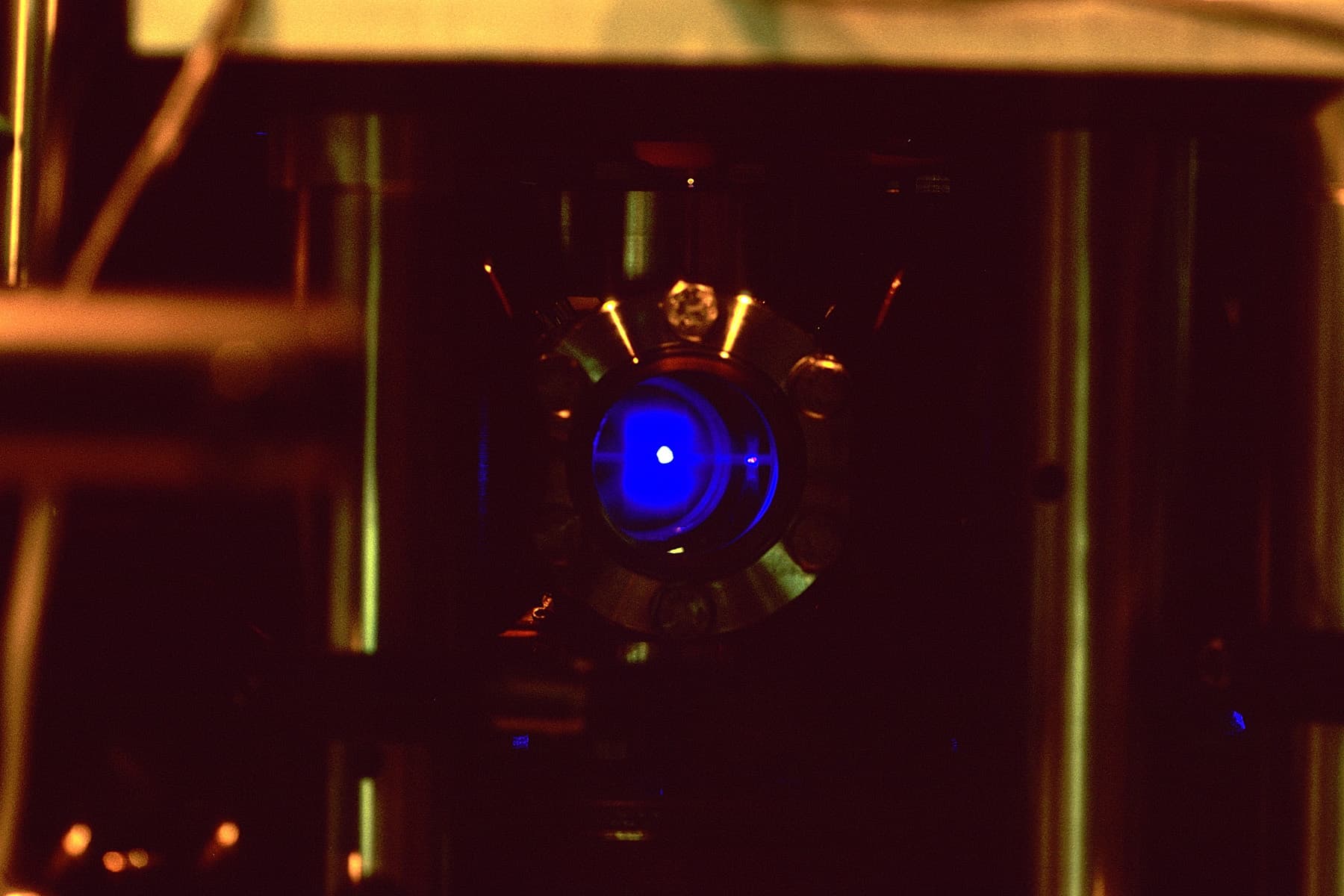
The electron we're measuring is usually attached to some atom that we're levitating in space with an optical lattice or an ion trap.
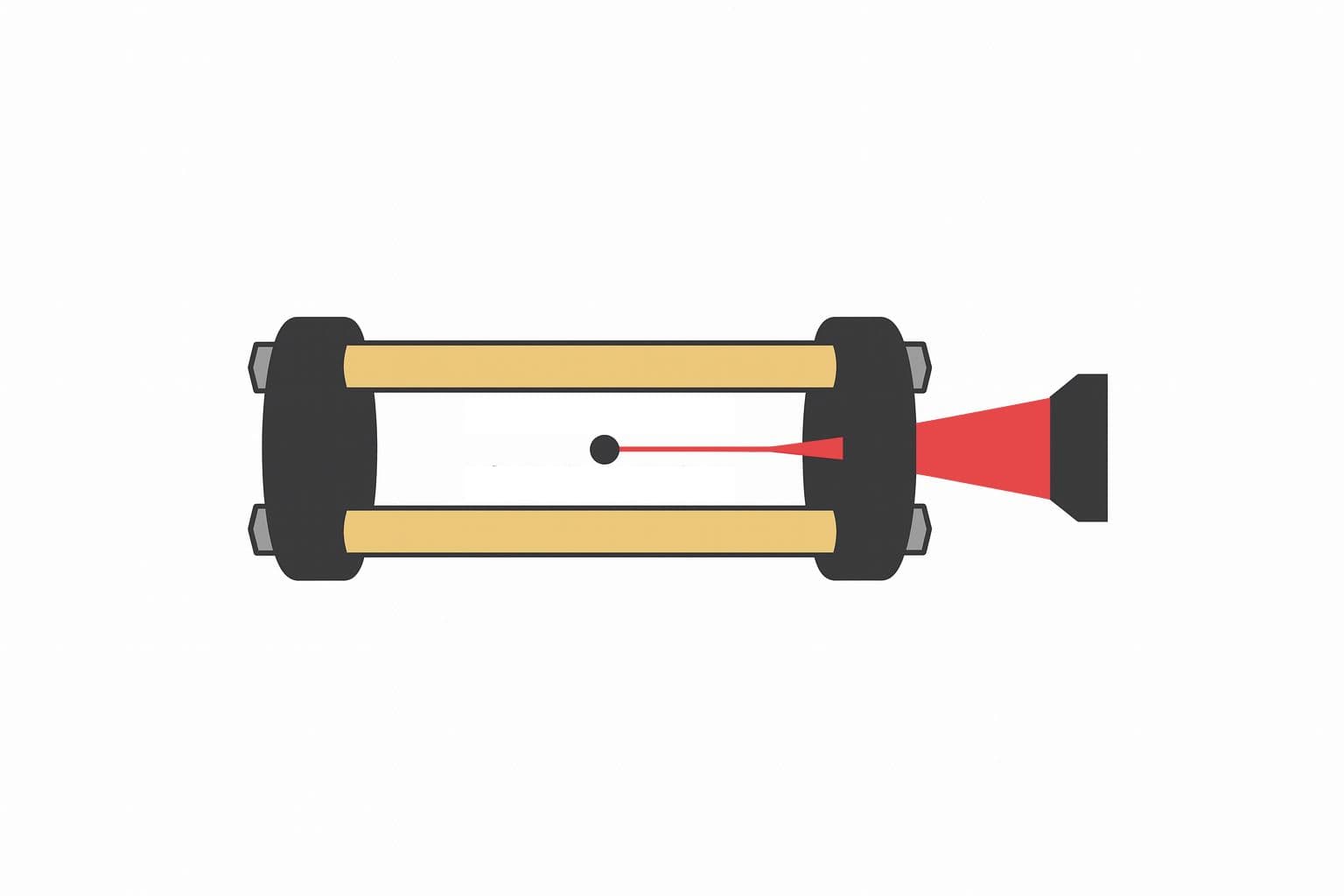
We shoot a special laser at it that only gets absorbed if the electron's spin is up. So if it absorbs, we know it's spin up!
How do qubits help us?
The biggest surprise: qubits are already inside technologies you use today.
MRIs
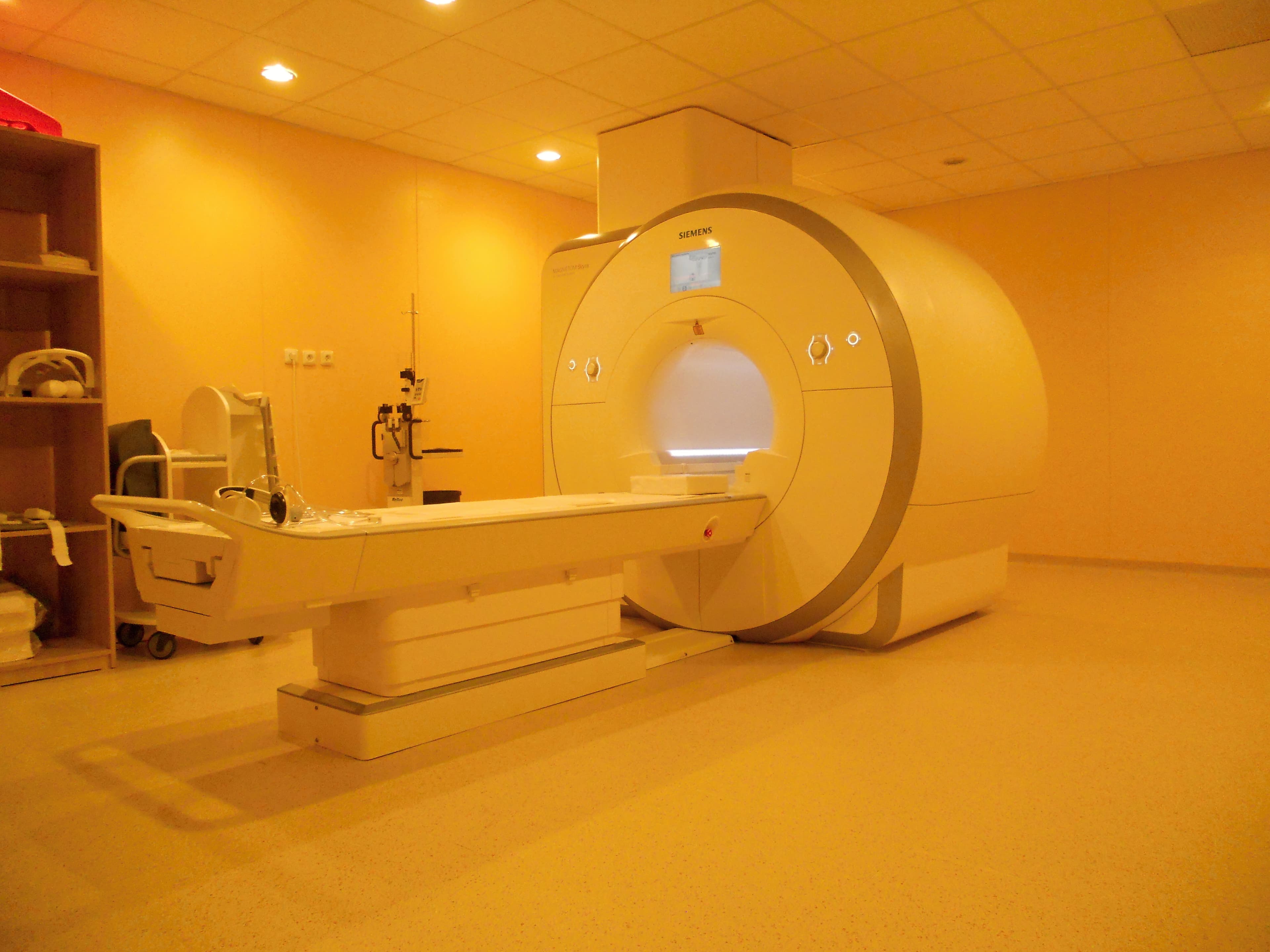
MRIs use the proton spin qubits in every water molecule of your body. Spins inside a magnetic field rotate. MRIs put your body inside a massive magnet, so the spins rotate very fast. That causes them to emit radio waves, which are detected by the machine.
Magnetometers
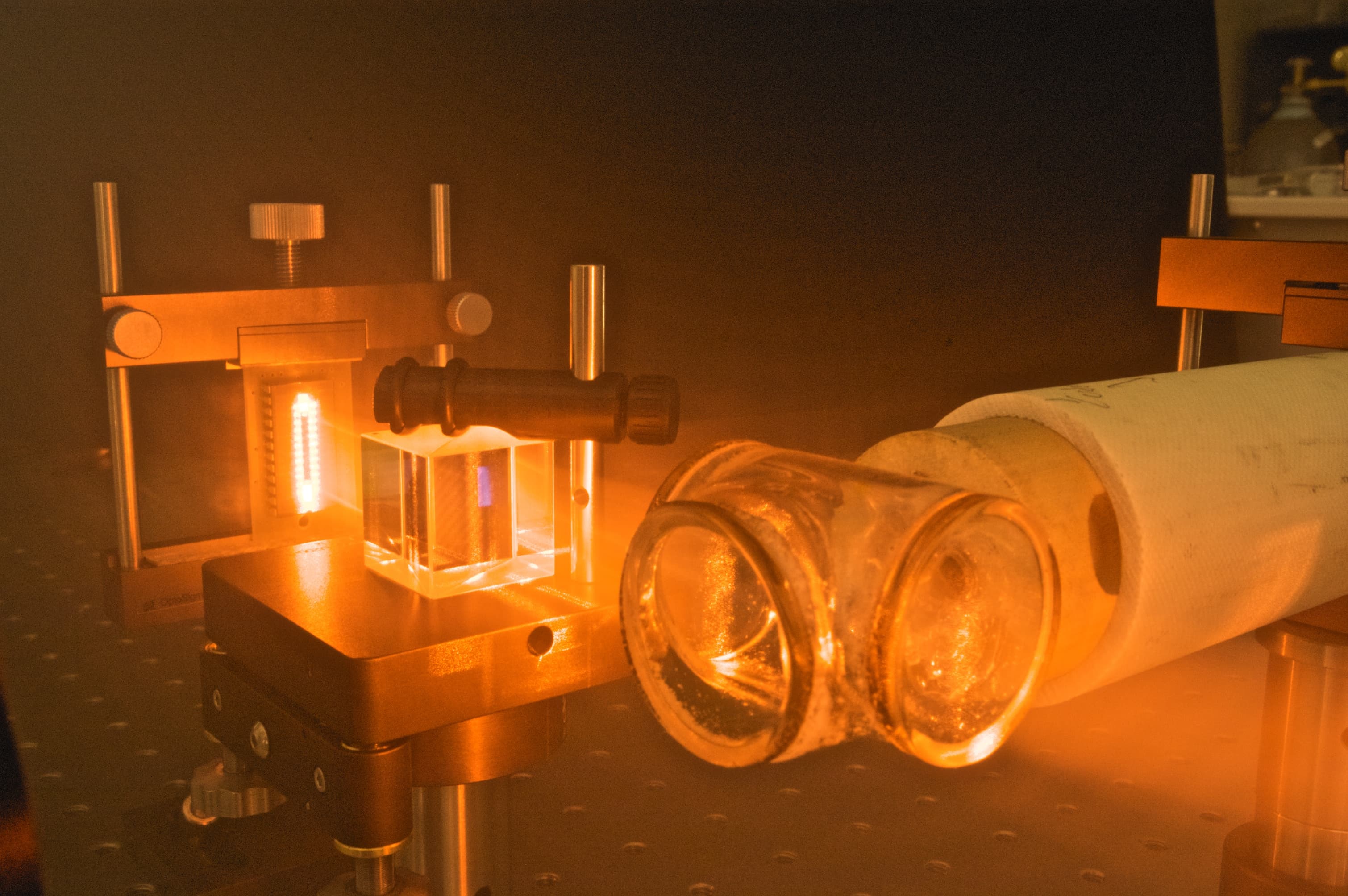
Magnetometers work on the same idea, in reverse. You let a spin rotate, and time your measurements so the answer is always “up” if your timing is right. If a measurement ever returns “down,” the timing has drifted, and you adjust. The amount you have to adjust tells you how strong the surrounding magnetic field is.
Atomic clocks
Atomic clocks work the same way, with one twist. The magnetic field is supplied by the atom's own nucleus, which is incredibly stable. So the rotation of the electron spin is incredibly consistent. Keep a timer running, measure at the moment you expect “up,” and if you ever get “down” instead, adjust the timer. That's a live correction loop, and it's how the most accurate clocks in the world stay accurate.
Quantum computing
Qubits can also be used to compute faster. Quantum computing replaces classical bits, which are just 0 or 1, with qubits. Detailed guide coming soon.